


Hooded eyes have a fold of skin that rests over or close to the lash line, so some makeup looks different open than closed. Shadow can disappear into the fold, and liner can smudge onto the lid. None of that means you cannot have the look you want. It means the application needs a little more thought.
Tell your makeup artist you have hooded eyes when you book, and ask whether they have worked with them before.
What to ask for
Every artist has a different method, so the best approach is to describe what you want and watch how they respond.
- Shadow placement. Many artists apply color a little above the natural crease so it stays visible when your eyes are open.
- Matte shades in the crease. Soft matte tones add depth, and a light shimmer on the center of the lid adds brightness.
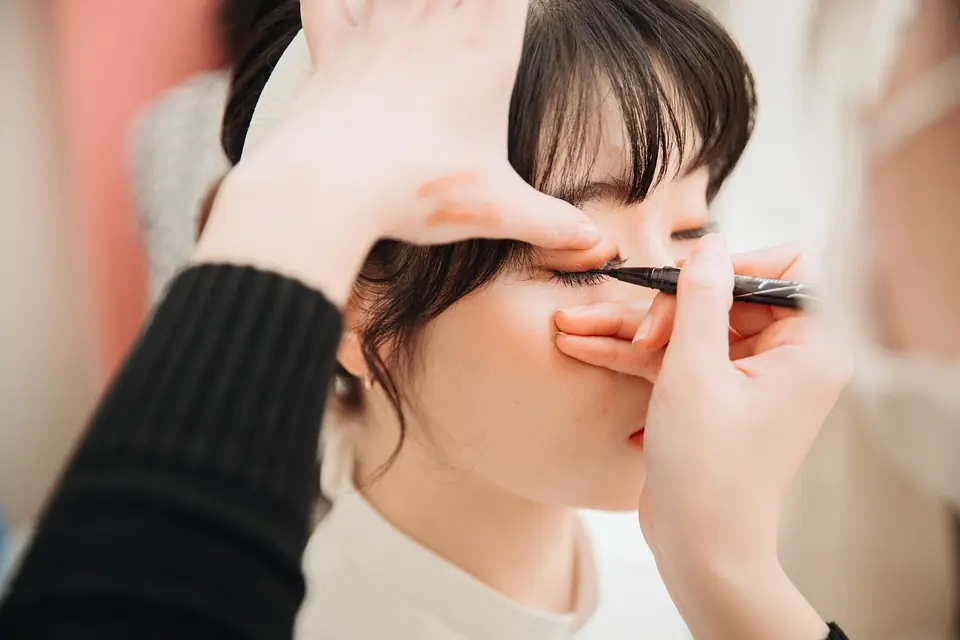
- Liner. A thin line close to the upper lashes, perhaps with a small wing, is common. Ask whether a pencil or a gel liner will hold up better on your lids.
- Lashes. Curling lashes lifts the eye. If you want false lashes, ask for a lightweight strip or individual lashes and test them at the trial.
- Primer and setting. A primer, a thin layer of powder and a smudge-resistant formula can all help prevent transfer onto the lid.
Check the look from several angles
A hooded eye looks different from the front, from the side and in a photo. At your trial:
Photos matter because your wedding photos will show the look at a distance and in motion. If your photographer is already booked, ask what they would suggest about flash and glare.
Make it last
- Prep your skin. Moisturize the night before and let it absorb before the makeup goes on.
- Choose waterproof or smudge-resistant products for the eyes, since ceremonies and speeches often bring tears.
- Pack a touch-up kit. Cotton swabs, a small pencil and a travel-size setting spray are helpful.
- Leave enough time. Our hair and makeup timeline suggests how to schedule the morning.
Budget and booking
Artists often book months ahead for popular dates, and trials and touch-up services may cost extra. Ask what is included in the price, whether there is a travel fee and what the cancellation policy is. For the tipping norms, see our wedding tipping guide.
General information, not legal, medical or financial advice. Confirm details with your vendors, venue, officiant and local authorities.
Questions people ask
How should hooded eyes wear eyeshadow for a wedding?
Many artists place color slightly above the natural crease so it shows when your eyes are open. Check the look open and closed at your trial.
Should I do a makeup trial for my wedding?
Yes, if you can. A trial lets you test the look in daylight and in photos, and it shows how long it lasts.
Can I wear false lashes with hooded eyes?
Often, yes. Lightweight strips or individual lashes are common choices. Test them at your trial to make sure they feel comfortable.