




Skip to content
Free guides and 18 planning tools for every stage of your weddingExplore the tools
THE WEDDINGBLUEPRINT
Ebook shop

Engagement guide: Just engaged. Now what?

The first weeks after the proposal: celebrating, telling people, the ring, and the three decisions that make everything else easier.

Congratulations. Before anyone asks about the date, give yourselves a week or two to simply enjoy it. When you are ready, the order matters more than the speed: talk about what you want the day to feel like, agree on a spending boundary and sketch a guest range. Venues, dates and vendors all follow from those three.

Before the wedding · 01 4 in-depth articles 3 free tools 6 answered questions
A woman covering her mouth in surprise as her partner proposes
Photo · Andre Jackson / Unsplash

How long is the average engagement?

About 18 months, according to Zola’s 2026 survey of more than 11,500 engaged couples. Anything from a few months to two years is normal.

Do we need to book anything this week?

No. The only urgent thing is enjoying it. Popular venues book 10–14 months ahead, so start the search once your budget and guest range exist.

Who should we tell first?

Parents, children and grandparents in person or by phone, before any social post. Close friends next, then everyone else.

Should we post about it?

Wait until your inner circle knows. If you plan a small wedding, go easy on public posts so people don’t assume an invitation.

The first two weeks

There is no rule that says planning starts the moment the ring appears. Most couples feel pulled in five directions at once: family wants a date, friends want details, Pinterest wants attention. It helps to decide, together, what the first two weeks are for.

Three conversations before any booking

1. How should it feel? Each of you writes down three words: intimate, lively, relaxed, traditional, outdoorsy, glamorous. Compare. The overlap is your brief, and it will save you from booking a ballroom when you both secretly wanted a long table in a garden.

2. What can you comfortably spend? Not what a wedding "should" cost. Look at savings, what you can put aside each month, and any family contributions that are actually confirmed. Zola found that 88% of 2026 couples are paying for at least part of their wedding themselves, and 71% receive some family help — so it is normal to have both.

3. Roughly how many people? Write a quick A-list and a longer version. Guest count drives venue size, catering, rentals and most of your budget, so a range (say 60–90) is more useful than a guess.

The ring: insure, size, clean

  • Insurance: add it to renters or homeowners insurance as a scheduled item, or use a specialist jewelry insurer. You will usually need an appraisal or the receipt.
  • Sizing: fingers swell in heat and shrink in cold. If it spins or pinches, a jeweler can resize most bands; some designs (eternity bands, tension settings) are harder to change.
  • Care: take it off for the gym, gardening, swimming and hand cream. A soft toothbrush and warm soapy water keep it bright between professional cleans.

Telling people and announcing it

Tell parents, children from a previous relationship and grandparents personally first. A quick phone call to close friends comes next. After that, an online post, a card or a newspaper announcement is up to you.

Engagement parties and photos

An engagement party is optional. Traditionally the bride’s parents hosted; today anyone close can. The one firm etiquette rule: only invite people you expect to invite to the wedding. Engagement photos are also optional but useful — for save-the-dates, your wedding website, and getting comfortable in front of the photographer you might book for the day.

First-month mistakes to avoid

  • Booking before you have a budget. A deposit is hard to undo; a spending boundary comes first.
  • Promising roles or invitations too early. “You’ll be my bridesmaid!” is lovely — and hard to take back if plans change.
  • Announcing a date before the venue confirms it. Share the season, not the day.
  • Comparing your timeline with everyone else’s. Engagements of six months and two years both lead to beautiful weddings.

When you are ready to plan

Once the three conversations are done, you can start looking at dates and venues. The first 30 days guide walks through the order, and the planning checklist turns your date into a month-by-month list.
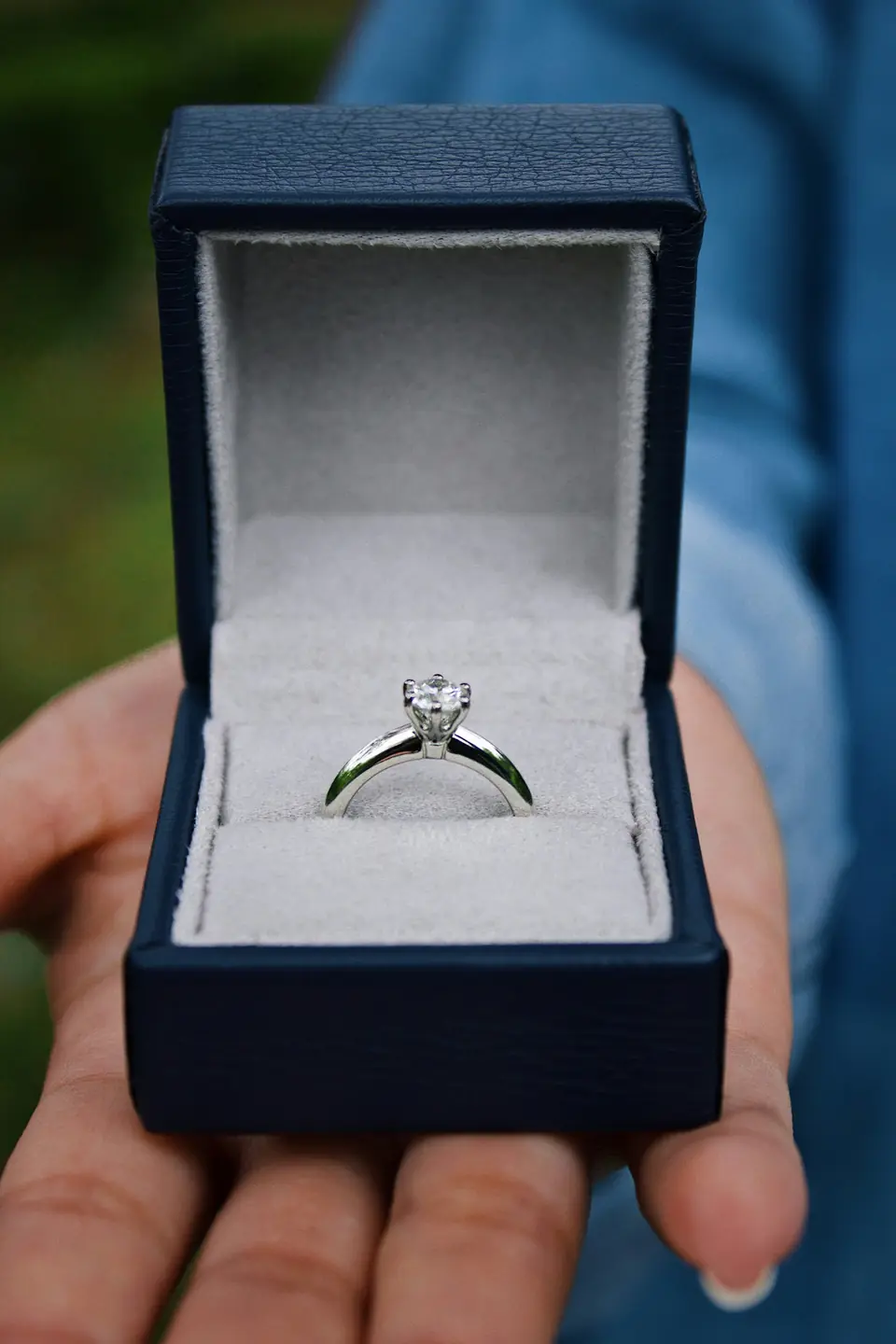

A solitaire engagement ring in an open navy ring box
Photo · Korie Cull / Unsplash
A laughing couple doing a piggyback on the beach for engagement photos
Photo · Allen Taylor / Unsplash
A smiling woman holding out her hand to show her engagement ring
Photo · Adrian Ordonez / Unsplash

Questions about just engaged

Asked and answered.

More in our full questions and answers.

How soon after getting engaged should we set a date?

There is no deadline. Most couples choose a date window within the first two or three months, once they know their budget and guest range. The exact date usually depends on venue availability.

Who pays for the engagement ring?

Traditionally the person proposing, but many couples now choose and pay for rings together. The Knot’s 2026 study found lab-grown center stones in 61% of engagement rings, with an average spend of about $4,600 on lab-grown rings.

Is it rude to post our engagement before telling family?

Many people would feel hurt to find out online. A quick call to close family first avoids that.

Do we need an engagement party?

No. If you have one, invite only people who will also be invited to the wedding, and don’t expect gifts. See the engagement party guide.

What should we do first after getting engaged?

Celebrate, tell your people, insure the ring, then have three conversations: how it should feel, what you can spend and roughly how many guests. The first 30 days guide covers the order.

Should we set a wedding date right after getting engaged?

Choose a season or a few possible months first. The venue’s availability usually decides the exact date, so confirm it before announcing.

The planning letter

One calm, useful email at a time.

A short note for your planning season: one idea worth knowing, one tool to try, and a reminder of what matters this month. No spam, ever.

Occasional emails, easy unsubscribe. Privacy policy.

We use analytics cookies to understand how visitors use our site. Functional cookies (session and page variant) are always set. See our Privacy Policy.