




A quote can be accurate and still leave important costs outside the headline number. The useful question isn’t “how much?” It is “what will this cost for our guest count, our timing and our full setup?”
The usual suspects
| Hidden cost | Where it hides | What to ask |
|---|---|---|
| Service charge | Venue and catering quotes (often 18–25%) | Does it include staff gratuity? Is it taxed? |
| Sales tax | Food, drink, rentals, venue fees | Is tax included in the per-person price? |
| Gratuities | Hair and makeup, drivers, bartenders | Is gratuity already in the contract? |
| Delivery, setup, breakdown | Florist, rentals, cake, décor | Are these charged separately? Late-night pickup fees? |
| Overtime | Venue, photographer, DJ, band | What is the hourly overtime rate? |
| Vendor meals | Caterer | Are vendor meals required and at what price? |
| Cake-cutting & corkage | Venue or caterer | Fees for bringing your own cake or drinks? |
| Alterations | Dress, suits | Written estimate before work starts |
| Postage | Save-the-dates, invitations, thank-yous | Heavy or square envelopes cost more |
A worked example: the per-person price
A caterer quotes $95 per person for 100 guests: $9,500. Add a 22% service charge ($2,090). Where sales tax applies to the whole bill, 8% of $11,590 adds another $927. The real figure is about $12,517 — roughly a third more than the headline number.
Rates differ by state, venue and contract, and some venues tax the service charge while others don’t. The point isn’t the exact percentages; it is to ask every vendor for the all-in number for your guest count before you compare them.
Compare the same scope
Give vendors the same date, approximate headcount, hours and requirements. Separate mandatory costs from optional upgrades, and ask how a change in guest count affects the final invoice.
Paid, committed and available
A deposit is part of a commitment, not the full cost. For each supplier, record the total agreed amount, money already paid, remaining balance and due dates. Add estimates for decisions still open. That shows what is actually available before you say yes to another upgrade.
The final-month extras
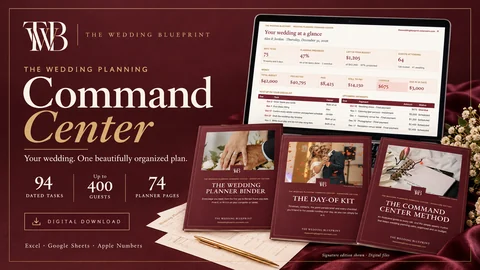
Welcome bags, a second outfit, extra flowers, printing, tips, the rehearsal dinner bar tab, a hotel room for getting ready, and last-minute signage. Put a line for “final month” in the budget from the start. The budget planner includes one.
Hidden costs, vendor by vendor
| Vendor | Costs that are easy to miss |
|---|---|
| Venue | Ceremony fee, security, cleaning, required insurance, event-day manager, generator or restroom trailers for outdoor sites |
| Catering | Service charge, tax, cake-cutting, corkage, vendor meals, tastings for extra people, linens and glassware |
| Photography & video | Travel, second shooter, overtime, engagement session, albums and prints |
| Florist | Delivery, setup and breakdown (“strike”), vessel rentals, late-night pickup |
| Hair & makeup | Trial, travel fee, early-start fee, touch-up artist who stays |
| Attire | Alterations, steaming, undergarments, shoes, veil, cufflinks, dry cleaning |
| Music | Overtime, travel, ceremony sound system, extra microphones |
| Stationery | Postage, envelope addressing or calligraphy, programs, menus, place cards, signs |
| Transportation | Minimum hours, travel time to your start point, gratuity |
The questions that reveal the real price
General information, not legal, medical or financial advice. Confirm details with your vendors, venue, officiant and local authorities.
Questions people ask
Is a service charge the same as a tip?
Not necessarily. Ask what it covers; some venues keep it as a fee and staff receive none of it.
How much buffer should a wedding budget have?
Five to ten percent of the total is a common range.
Are wedding vendor quotes negotiable?
Often, especially for off-peak dates or when you change the scope. Ask what is included, whether a package can be tailored, and what they would suggest for your budget. Don’t negotiate staff pay or safety items.
Is wedding insurance worth it?
It can be once you have paid significant deposits. Policies commonly cover postponement or cancellation for covered reasons and liability, and some venues require liability cover. Read the exclusions before you buy.
What is a vendor meal?
A meal for vendors working through dinner, such as the photographer, DJ and coordinator. Many contracts require one, and caterers usually charge a reduced price per vendor.