



“Who walks down the aisle first?” is one of the most-searched wedding questions. Here are the common orders — adapt them freely.
Order of service
- Prelude music as guests arrive
- Seating of grandparents and parents
- Processional
- Welcome from the officiant
- Readings or music
- Address or your story
- Vows
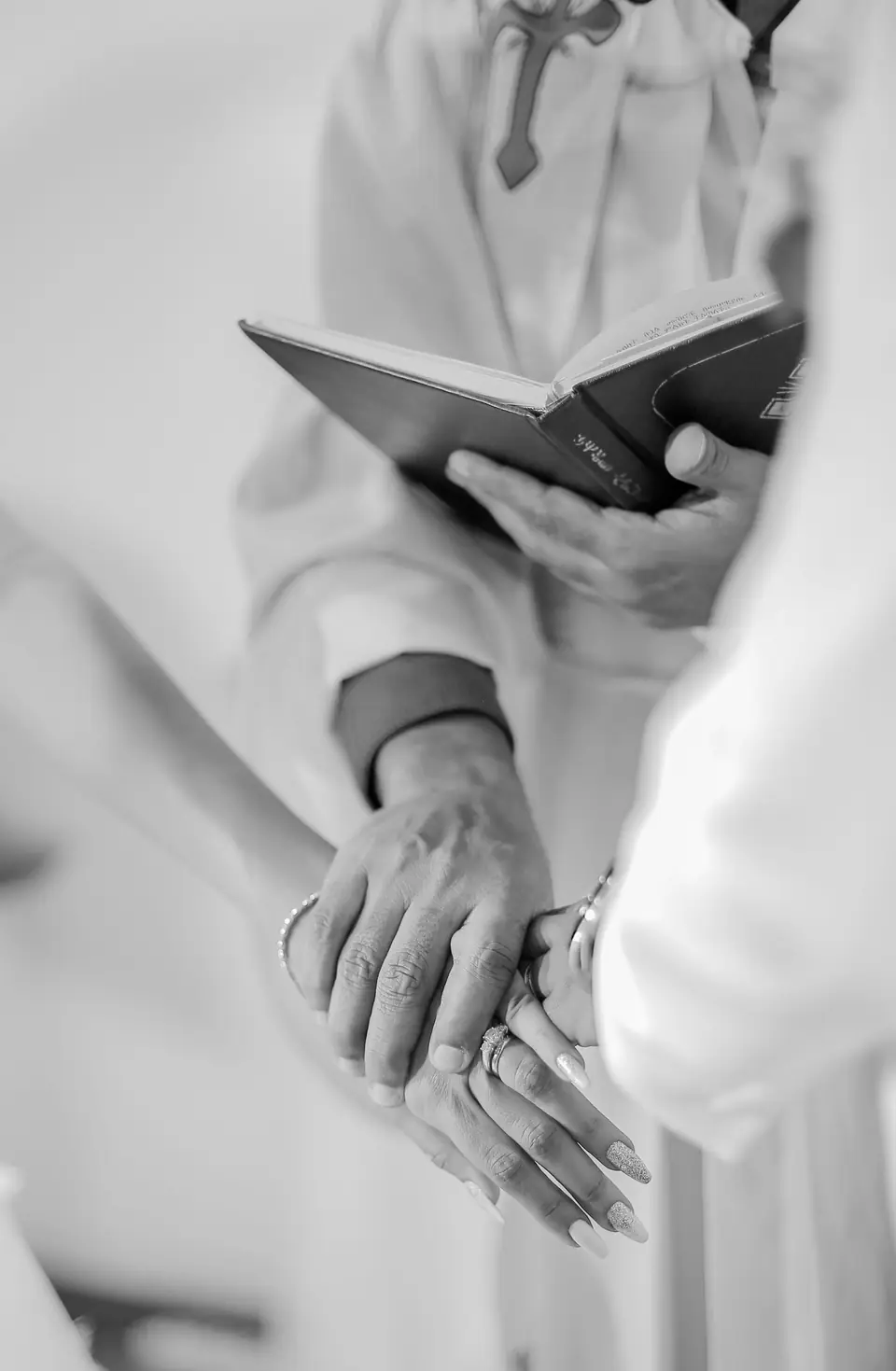
- Ring exchange
- Unity ritual (optional)
- Declaration and kiss
- Recessional
How long each part takes
| Part | Typical length |
|---|---|
| Processional | 3–5 minutes |
| Welcome | 2 minutes |
| Each reading | 2–3 minutes |
| Address or your story | 5–10 minutes |
| Vows | 2–4 minutes |
| Ring exchange | 2 minutes |
| Unity ritual | 2–3 minutes |
| Pronouncement and kiss | 1 minute |
| Recessional | 2 minutes |
Many non-religious ceremonies last 20–30 minutes; religious services are often 45–60 minutes or longer.
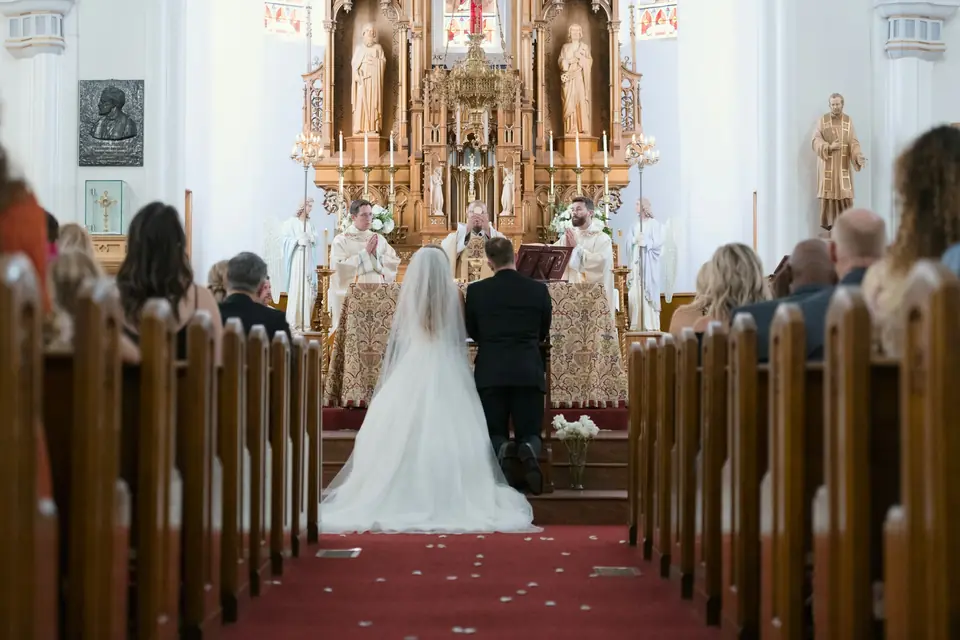
A common Christian / Western processional
- Officiant, groom and (optionally) groomsmen take their places
- Grandparents of the groom, then of the bride, are seated
- Parents of the groom are seated
- Mother of the bride is seated
- Bridesmaids (singly or with groomsmen)
- Maid of honor
- Ring bearer and flower girl
- The bride, with her escort
A common Jewish processional
- Rabbi or cantor
- Grandparents of the bride, then of the groom
- Groomsmen and best man
- The groom, with his parents
- Bridesmaids and maid of honor
- Ring bearer and flower girl
- The bride, with her parents
Recessional
The couple, flower girl and ring bearer, maid of honor and best man, attendants in pairs, then parents and grandparents.
Variations
- Divorced parents: each parent can walk separately, or a parent and stepparent together; seat them in the front rows on either side or in separate rows.
- Two grooms or two brides: walk in separately, together, or meet halfway.
- Blended families: children can walk a parent down the aisle, or walk in together as a family.
Music for each moment
Plan four pieces of music: the prelude while guests arrive (about 20–30 minutes of songs), one for the wedding party’s processional, one for the final entrance, and an upbeat recessional. Give your musicians or DJ the exact cue for each.
General information, not legal, medical or financial advice. Confirm details with your vendors, venue, officiant and local authorities.
Questions people ask
Who walks down the aisle first at a wedding?
Usually grandparents and parents are seated, then the wedding party walks, the maid of honor, ring bearer and flower girl, and finally the bride.
Does the groom walk down the aisle?
In many Western ceremonies the groom enters from the side with the officiant; in Jewish ceremonies he walks with his parents. Either is fine.
How long is a wedding ceremony?
Many ceremonies last 20–30 minutes. Religious services are often 45–60 minutes or longer.
Where do the parents sit at the ceremony?
In the front rows. In many Christian ceremonies the bride’s family sits on the left and the groom’s on the right; in Jewish ceremonies it is usually reversed.