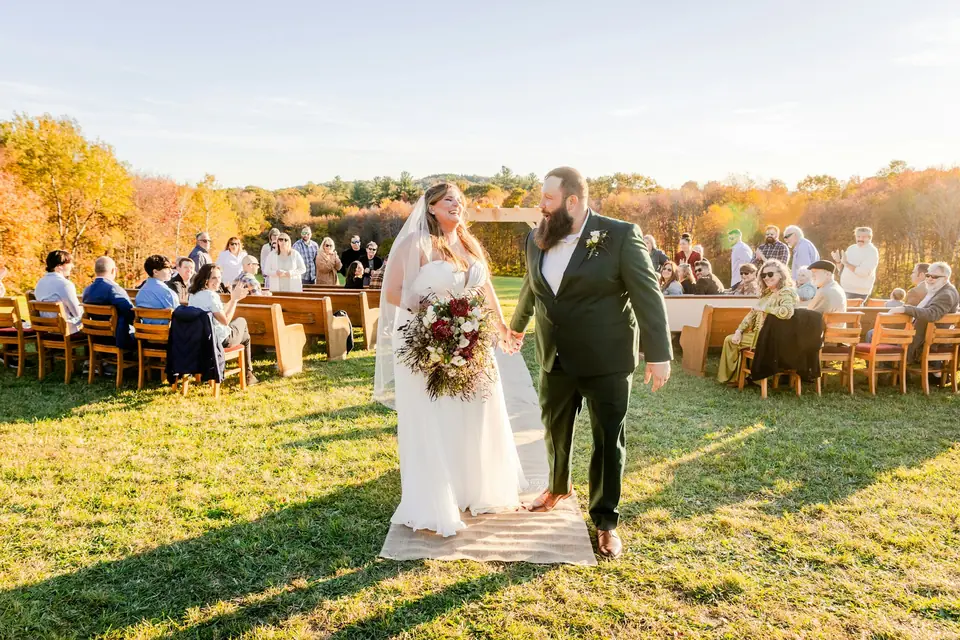






An illustrative planning story. The couple and numbers are examples, not real people or quotes — a worked method you can adapt to your own city, budget and families.
This is an illustrative example, not a real couple. Priya and Daniel planned an outdoor ceremony at a ranch outside Austin in May. Five days out, the forecast showed afternoon storms. Here is how a calm plan B can play out.
Months before: the hold
At booking, they asked the venue about the rain plan and put a tent on a refundable hold with the rental company, with a decision deadline 72 hours before the wedding.
Five days out: watch, don’t panic
They agreed to look at the forecast once a day, at 8 a.m., and make the call at the deadline. No refreshing the radar at midnight.
72 hours out: make the call
| Decision | What they did |
|---|---|
| Ceremony | Moved under the tent, chairs turned to face the view |
| Cocktail hour | Into the barn, with the doors open |
| Photos | First look on the covered porch; portraits in the barn doorway |
| Guests | One message: new location, flat shoes, umbrellas at arrival |
The day itself
The coordinator kept the timeline, umbrellas waited in a bucket at arrival, and towels sat by the barn door. The storm cleared at sunset — and they stepped out for ten minutes of photos in golden light.
What to take from it
Ask for the rain plan when you book, hold a tent if you can, set a decision deadline, and write the guest message in advance. The timeline builder and contact sheet keep everyone in sync.
General information, not legal, medical or financial advice. Confirm details with your vendors, venue, officiant and local authorities.
Questions people ask
When should you decide on a wedding rain plan?
Set a deadline with your venue and tent company — often 48–72 hours before — and make the call then.
How do you tell guests about a wedding rain plan?
One short message with the new location, the time and any advice on shoes or parking.