

“Wedding dress styles for my body type” is one of the most-searched bridal questions. The honest answer: any silhouette can work on any body. The better question is how you want to feel, how you’ll move, and where you’re getting married.
The eight silhouettes
A-line. Fitted through the bodice, then flares gently from the waist to the floor like the letter A. Easy to move in, works in almost any setting, and one of the most widely chosen shapes.
Ball gown. A fitted bodice with a very full skirt, often with layers of tulle or structured satin. The most formal and dramatic. Needs space, a good bustle and a plan for bathroom trips.
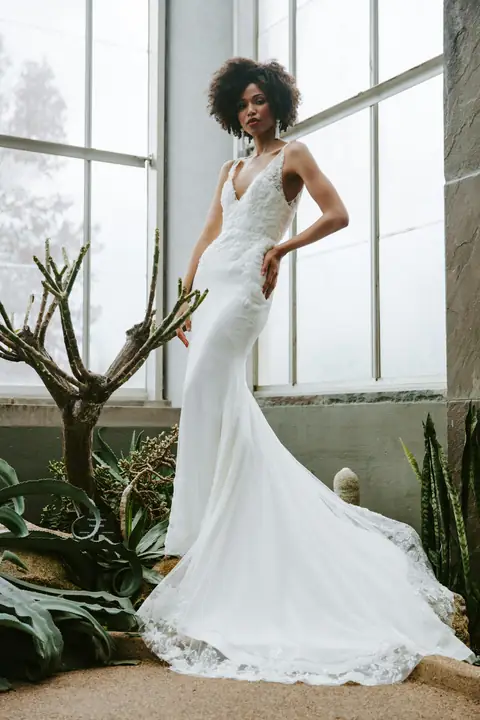
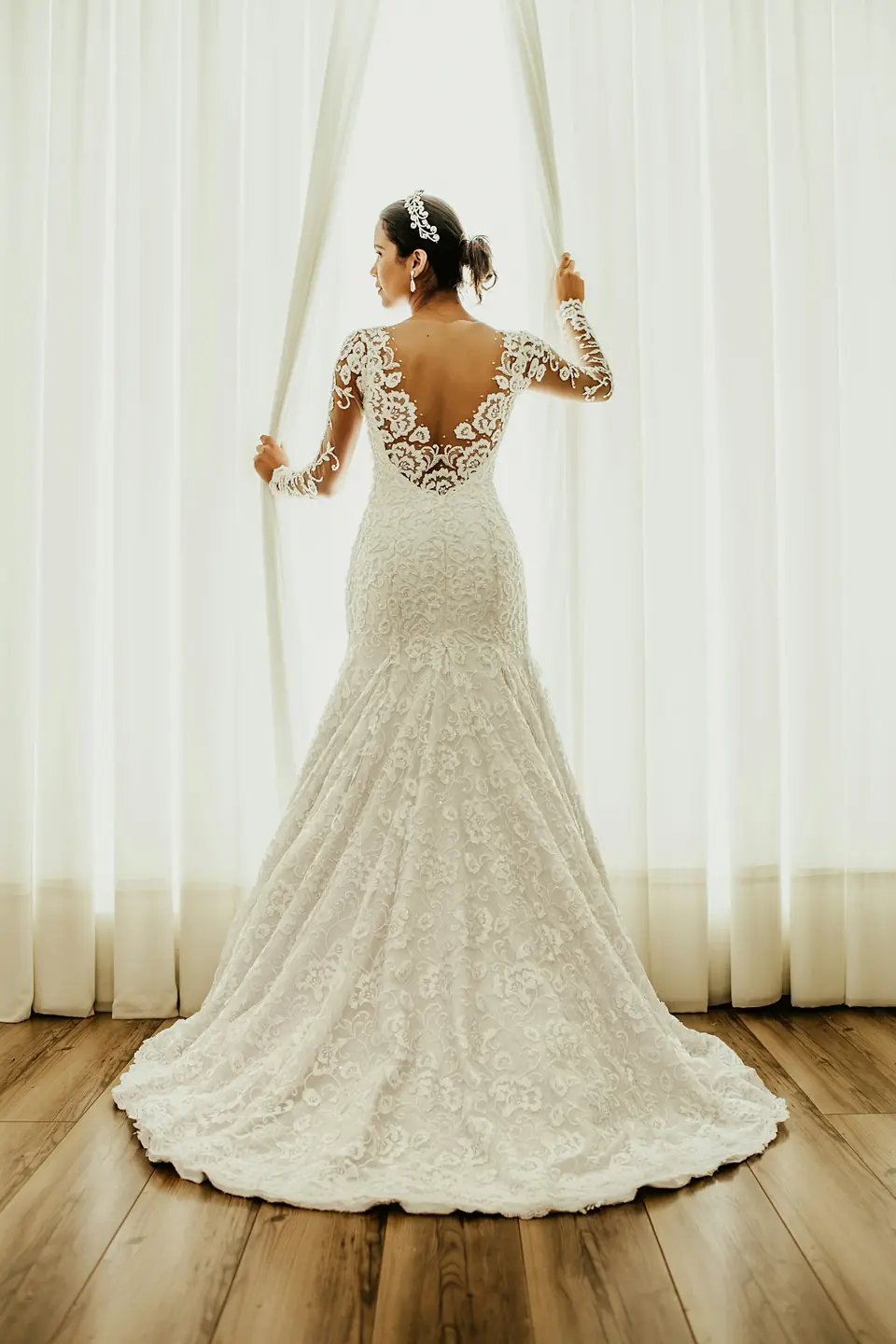
Mermaid. Fitted to the knee, then flares out. Striking and body-skimming. Walking, sitting and dancing take practice, so test them at fittings.
Trumpet (fit-and-flare). Fitted to mid-thigh, then flares — the drama of a mermaid with more movement.
Sheath or column. Follows the body in a straight line with little flare. Light, modern and easy to wear; lovely for beaches, cities and courthouses.
Empire. A high waistline just under the bust with a flowing skirt. Comfortable, romantic and often chosen by pregnant brides.
Tea-length. The hem falls between the knee and ankle. Relaxed, vintage-feeling and great for showing off shoes.
Jumpsuits and separates. Bridal tops with skirts or trousers, or a jumpsuit. Modern, comfortable and easy to wear again.
Match it to the day
| If your wedding is… | Shapes to try |
|---|---|
| A formal ballroom or cathedral | Ball gown, A-line, trumpet |
| A beach or destination | Sheath, soft A-line, empire |
| A garden or barn | A-line, tea-length, soft trumpet |
| A courthouse or city | Sheath, tea-length, separates, jumpsuit |
| Long and full of dancing | A-line, sheath, separates |
Fabric changes the shape
| Fabric | What it does |
|---|---|
| Tulle | Soft, airy volume; floats in photos |
| Satin or mikado | Structure and sheen; holds a clean, formal shape |
| Crepe | Smooth and fluid; modern and minimal |
| Chiffon | Light and floaty; lovely in heat and wind |
| Lace | Texture and romance; ranges from delicate to heavy |
| Organza | Crisp volume that is lighter than it looks |
The same A-line can feel completely different in crepe and in tulle — try the fabric as well as the shape.
Body confidence, not body rules
Many brides told us through comments on dress-shopping videos that “flattering” rules made them feel worse. Fit, fabric and comfort matter more than following a chart. A skilled seamstress can adjust almost any silhouette to you.
General information, not legal, medical or financial advice. Confirm details with your vendors, venue, officiant and local authorities.
Questions people ask
What is the most popular wedding dress silhouette?
A-line remains one of the most popular, because it is comfortable and works at almost any venue.
What dress shape is best for a beach wedding?
Light sheath, soft A-line and empire styles in chiffon or crepe are easiest in heat and sand.
What is the difference between a mermaid and a trumpet dress?
A mermaid flares at or below the knee; a trumpet flares from mid-thigh, so it’s easier to move in.
Which wedding dress silhouette is most comfortable?
A-line, sheath and empire styles are usually the easiest to sit, walk and dance in. Fabric matters too: lighter fabrics feel cooler.
Can alterations change a dress’s silhouette?
Only a little. A seamstress can adjust fit, take in a skirt or add a bustle, but turning a ball gown into a sheath isn’t realistic.