
An illustrative planning story. The couple and numbers are examples, not real people or quotes — a worked method you can adapt to your own city, budget and families.
This is an illustrative example, not a real couple. Emma was raised Catholic and Noah Jewish. Both families cared about tradition, and the couple wanted one ceremony where everyone felt at home. Here is one way it can come together.
Choosing the rituals
They each listed the traditions that mattered most to their families, then chose a few from each: a chuppah, readings from both traditions, a unity candle, and the breaking of the glass to close the ceremony.
The officiants
They asked a rabbi and a priest who had co-officiated before. When that isn’t possible, couples often choose an interfaith minister or a friend, and invite a family member to give a blessing.
The ceremony order
- Processional under the chuppah
- Welcome from both officiants
- A reading from each tradition
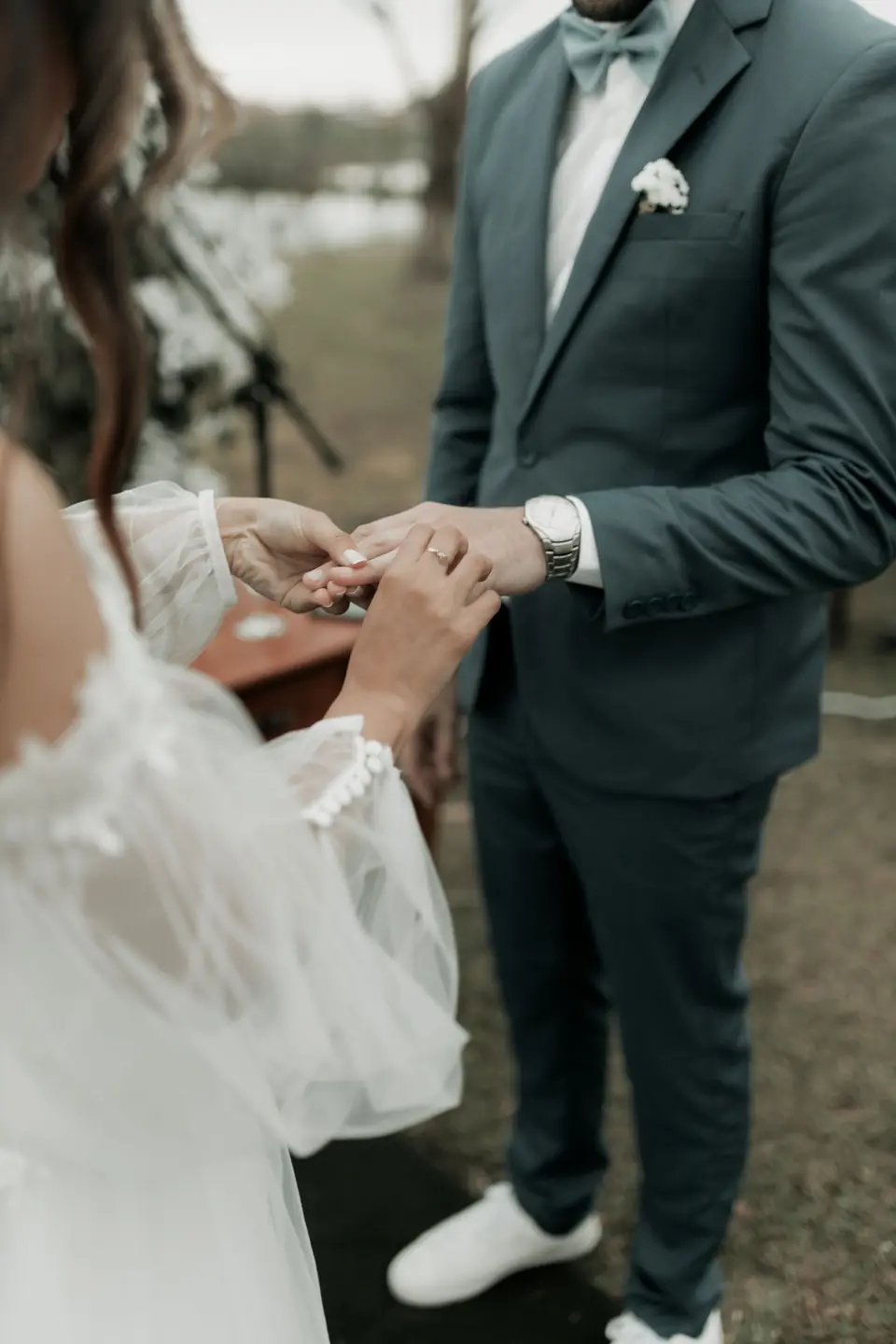
- Personal vows, then the ring exchange
- Lighting a unity candle together
- Blessings
- The breaking of the glass — and “Mazel tov!”
- Recessional
The ceremony script builder gives you an outline to adapt.
What to take from it
Choose fewer, meaningful rituals, talk to officiants early and explain each moment to guests. Our guide to blending traditions has more ideas.
General information, not legal, medical or financial advice. Confirm details with your vendors, venue, officiant and local authorities.
Questions people ask
How do you combine two religions in a wedding ceremony?
Choose a few meaningful rituals from each, find officiants comfortable with an interfaith ceremony, and explain each moment to guests.
Who can officiate an interfaith wedding?
Co-officiants from each faith, an interfaith minister, or a friend ordained for the day, depending on local law and your families.