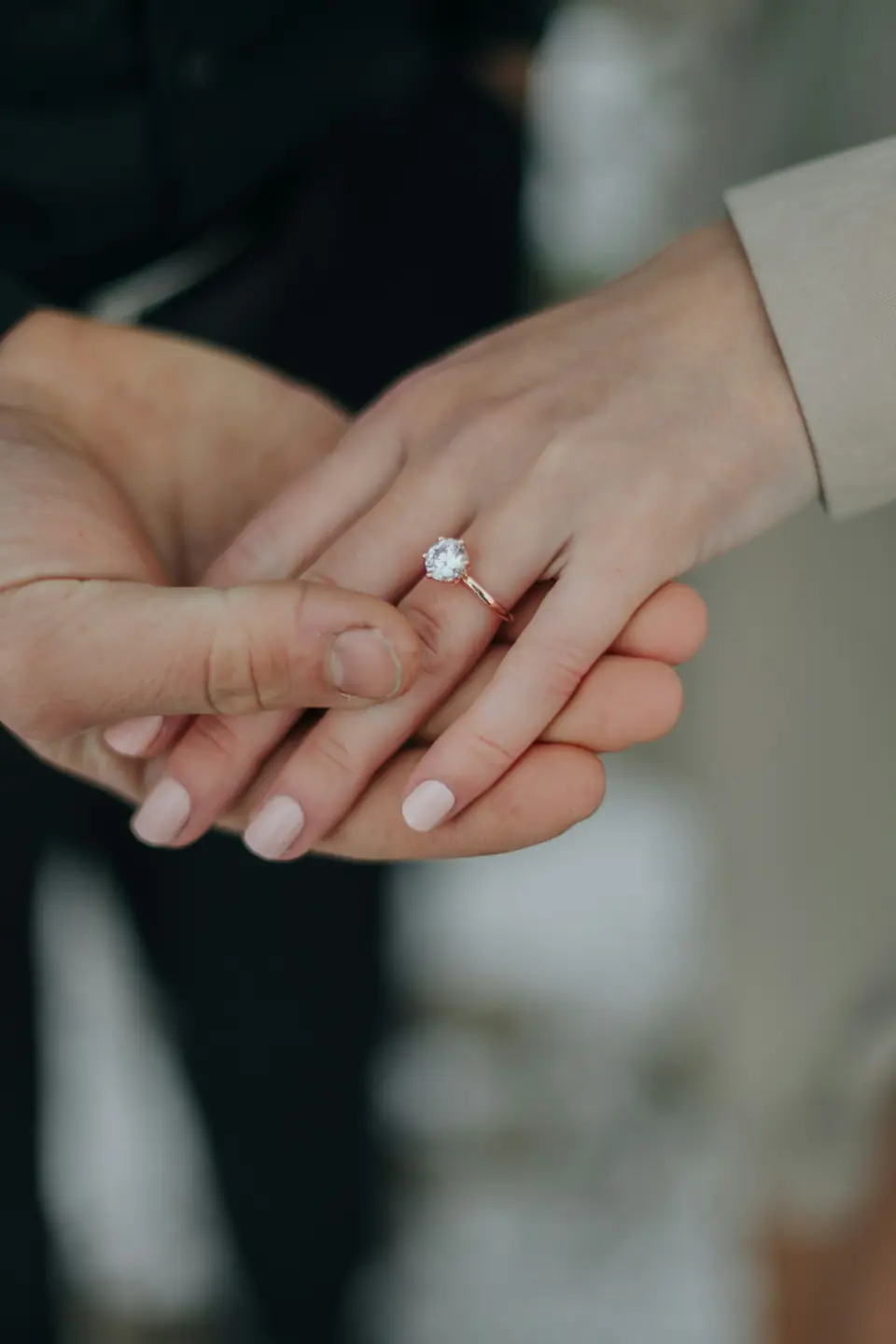

Choosing a ring can feel like a test. It isn’t. The best ring is one the wearer loves, that suits their daily life, and that you can afford without regret. Here is what actually matters.
Natural or lab-grown?
Lab-grown diamonds have the same chemical and physical properties as mined diamonds; they are grown in a laboratory rather than the earth. The Knot’s 2026 study found lab-grown center stones in 61% of engagement rings — a 239% increase since 2020. They usually cost significantly less for the same size and quality, but tend to have lower resale value. Natural diamonds carry the rarity and tradition some people care about. Both are real choices; neither is wrong.
Other beautiful options: moissanite, sapphire, emerald, morganite, or a family stone reset.
The 4Cs in plain English
| C | What it means | Where to be practical |
|---|---|---|
| Cut | How well the stone is shaped to reflect light | Prioritize it — cut drives sparkle |
| Color | How colorless the stone is (D is colorless) | Near-colorless grades look white in most settings, especially yellow gold |
| Clarity | Tiny inclusions inside the stone | “Eye-clean” is enough; you don’t need flawless |
| Carat | Weight, not size | Slightly under round numbers (0.9 vs 1.0) can cost noticeably less |
Ask for a grading report from an independent lab for any significant stone.
Shapes, settings and metals
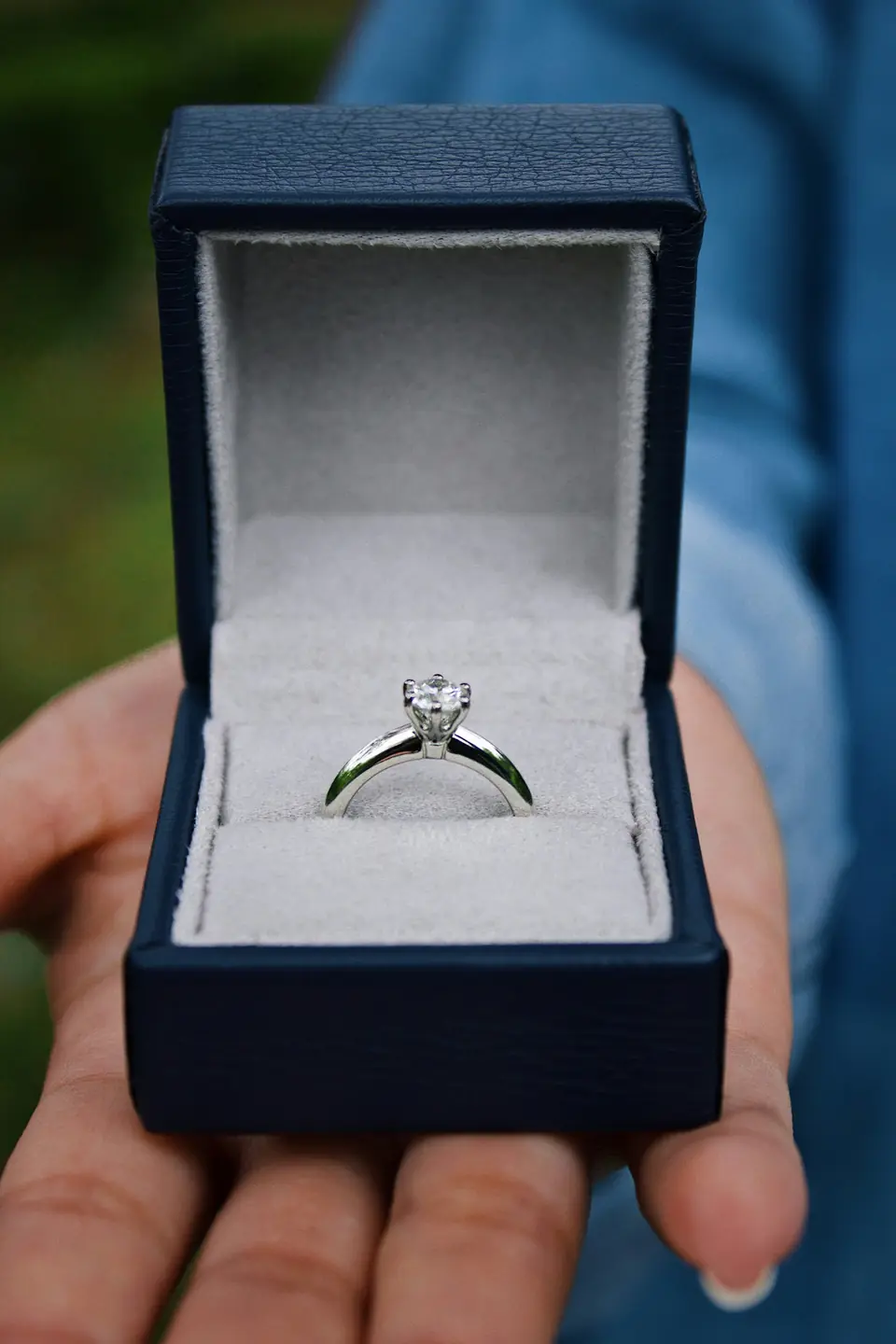
Shapes: round, oval, cushion, emerald, pear, marquise, princess, radiant. Elongated shapes (oval, pear, marquise) look larger for their weight. Settings: solitaire, halo, three-stone, pavé band, bezel (protective and modern), hidden halo, east-west. Metals: platinum (durable, naturally white, heavier), white gold (needs occasional re-plating), yellow and rose gold (warm and classic).
How much to spend
Advertising campaigns in the twentieth century popularized “two” and later “three months’ salary”. It was never a rule. Spend what you can pay for comfortably, remembering the wedding and your life after it.
Where to buy
Independent jewelers, established retailers and reputable online sellers can all be good choices. Whoever you buy from, ask for:
Thinking ahead to the wedding band
Some engagement rings sit flush against a straight band; others need a curved or notched “contour” band. If you love a particular setting, check which bands will sit well beside it before you buy.
Size, insurance and care
- Borrow a ring they already wear (from the correct finger) or ask a close friend to find out.
- Most rings can be resized once; some designs can’t — ask before buying.
- Add the ring to your home or renters insurance, or use a jewelry insurer. Keep the receipt and appraisal.
- Clean with warm soapy water and a soft brush; have prongs checked yearly.
General information, not legal, medical or financial advice. Confirm details with your vendors, venue, officiant and local authorities.
Questions people ask
How much should I spend on an engagement ring?
What you can afford without debt you’d regret. The Knot’s 2026 study reports an average spend of about $4,600 on lab-grown rings.
Are lab-grown diamonds real diamonds?
Yes. They are chemically and physically diamonds, grown in a lab rather than mined.
What is the difference between an engagement ring and a wedding ring?
The engagement ring is given at the proposal and usually has a center stone; the wedding band is exchanged at the ceremony and is often plainer. Many people wear both.
Which hand does the engagement ring go on?
In the US it is usually worn on the fourth finger of the left hand. Customs vary: in some countries it is worn on the right hand.
Do both partners wear engagement rings?
Increasingly, yes. Many couples choose rings for both partners; do whatever feels right for you.