




You do not need a complete wedding plan the week you get engaged. You need a handful of early decisions, made together, that give the venue search a purpose. Take the first week to celebrate. Then work through these five, roughly in this order.
1. Describe the experience you want
Separately, write down three words for how you want the day to feel: intimate, joyful, relaxed, traditional, lively, elegant. Compare them. Where your words overlap is your brief. Where they differ is a conversation worth having now, not after a deposit.
2. Set a spending boundary
Look at savings, what you can put aside each month until the wedding, and any family contributions that are actually confirmed. The total you can comfortably commit to — without debt you would regret — is your boundary. A national average is not a target: The Knot’s 2026 study put the average around $34,000, but plenty of beautiful weddings cost a fraction of that.
Put the number in the budget planner to see what it means category by category.
3. Sketch a guest-count range
Write a quick list of everyone you might invite, then a smaller version. Guest count shapes venue capacity, catering, rentals and seating. A range you can explain — “between 70 and 100” — makes every venue conversation more useful. The guest count calculator estimates how many will likely attend and what each guest costs.
4. Choose a location and date window
Think about travel for important people, family dates to avoid, weather, and how much time you want to plan. A season or three possible months gives you far more options than one fixed Saturday. Ask each venue which spaces are included and what happens if an outdoor plan needs to move inside.
5. Make one shared place for decisions
A shared document or folder with three sections: confirmed decisions, open questions and quotes and deadlines. Give every next action an owner. End each planning conversation with one small step each, and agree when you’ll talk again.
A simple 30-day plan
| Week | Focus |
|---|---|
| 1 | Celebrate. Tell the people who matter in person or by phone before posting. Add the ring to your insurance. |
| 2 | Three words for the day, and a spending boundary from real numbers. |
| 3 | A guest range and two or three possible seasons or months. |
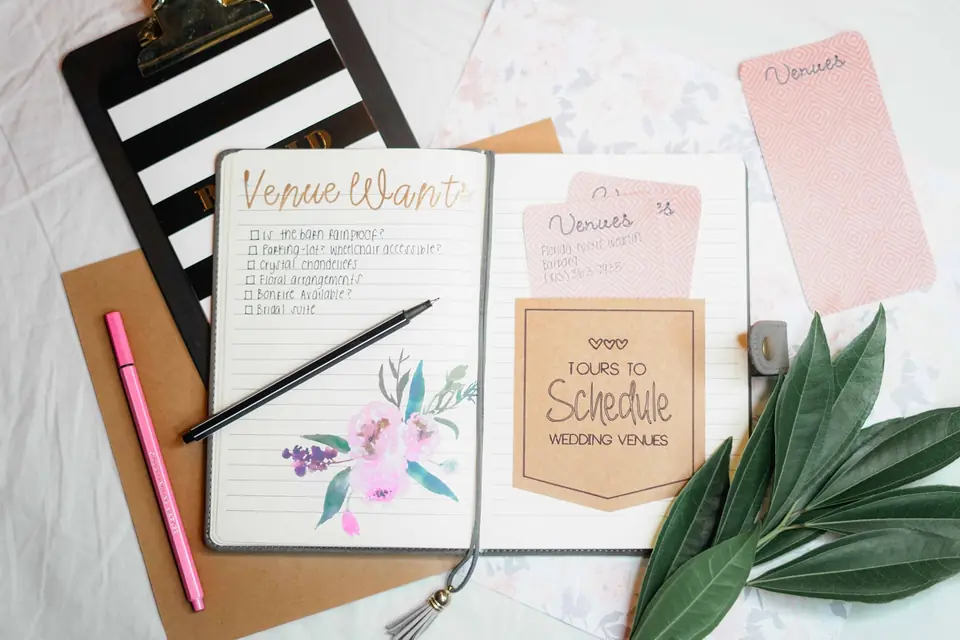
| 4 | A shortlist of five venues that fit your number, budget and area. Book tours. |
By day 30 you won’t have a wedding planned — you’ll have a brief that makes every venue visit useful.
What can safely wait
Colors, favors, the cake, the playlist, the exact dress. They are fun — and they get easier to choose once you know your venue, season and budget.
General information, not legal, medical or financial advice. Confirm details with your vendors, venue, officiant and local authorities.
Questions people ask
What should we do first after getting engaged?
Celebrate and tell your people. Then agree on how you want the day to feel, a spending boundary and a guest range. Those three decide your venue.
How soon should we book a venue?
Once you know your budget and guest range. For peak-season Saturdays, 10–14 months ahead is common.
Do we need a wedding planner straight away?
No. If you want full-service planning, book one early; otherwise, a day-of coordinator in the final months is often enough.
When should we announce our engagement?
Tell parents, children and close friends personally first. Share it publicly whenever you’re ready — there is no deadline.
Should we insure the engagement ring?
Yes, as soon as you can. Add it to your home or renters policy or use a jewelry insurer, and keep the receipt and appraisal.